Provo, UT · Utah County
Basement Water Removal in Provo, UTSump Pump Failure Water Cleanup & Basement Wall Drying
Basement Water Removal in Provo handles basement wall drying, basement floor water damage and basement dehumidification before the space turns musty.
Answered 24/7
Basement Water Removal Solutions for Provo Homeowners
In Provo, a finished basement or lower level takes more work after a flood. Carpet, pad, laminate, drywall and insulation all trap water against the concrete and framing.
A single storm or burst pipe in Provo can flood a basement. Local basement water removal pros serve Provo and nearby Orem, Springville and Vineyard, with help available around the clock.
Professional Basement Water Removal Offerings
Sump Pump Failure Water Cleanup
Cleanup after a sump failure includes drying the area around the pit and noting whether the pump, switch or power was the cause.
Basement Wall Drying
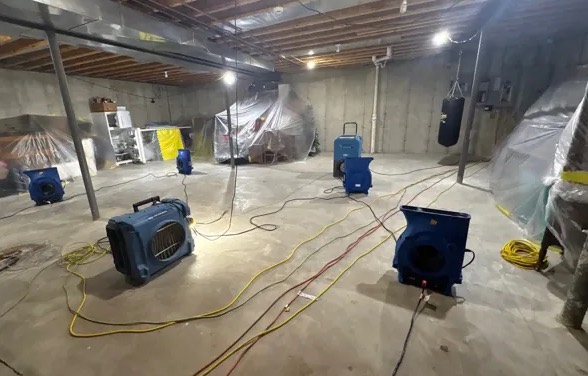
Concrete and block walls dry with directed airflow and dehumidification, which pull water out of the masonry.
Basement Moisture Inspection
Readings are recorded at each visit, giving you and your insurer a clear record of the drying.
Basement Floor Water Damage
Flooring that buckled or swelled is removed. Tile and sealed concrete can often be cleaned and dried in place.
Basement Dehumidification
Dehumidifiers run continuously during drying, and their output is checked to track how much water is still coming out of the materials.
When to Call for Basement Water Removal in Provo
Water Stains on Walls or Ceiling
Stains on lower walls or the ceiling below a bathroom or kitchen point to a leak.
Gurgling Sounds From Drains
Gurgling floor drains or slow drains can be an early sign of a sewer line problem.
Musty Odors and Mold Smell
A musty or damp smell in the basement points to wet materials hidden somewhere in the space.
Sump Pump Failure or Overflow
A sump pit that is full, overflowing or has a pump that will not start means water is about to spread.
How Basement Water Removal Works in Provo
Step 1: First Call and Initial Assessment
The source, the type of water and the depth are checked, and the water level is photographed.
Step 2: Bulk Water and Contaminant Removal
Pumps remove standing water, and carpet, pad or drywall touched by dirty water is removed.
Step 3: Drying With Monitoring
Dehumidifiers and air movers run around the clock, with readings logged every day on walls and slab.
Step 4: Post-Drying Evaluation and Documentation
Final readings and photos are compiled to show the basement is dry and what was removed.
Why Basements Flood in Provo
Window Well Leaks and Drainage
Window wells without drains or covers fill with rain and leak through the windows.
High Water Table and Hydrostatic Pressure
A high water table presses groundwater against the slab and walls, forcing it inside.
Heavy Rainfall and Storm Flooding
Heavy rain saturates the soil and pushes water through walls, cracks and the floor joint.
Sump Pump Malfunction or Power Loss
A sump pump that fails mechanically or loses power during a storm lets groundwater rise.
Basement Water Removal for Homes and Businesses
Residential Basement Water Removal
Older homes with a basement may see seepage with every heavy storm. Water removal handles the current damage, and the entry point is noted for a waterproofing contractor.
Commercial Basement Water Removal
Multi-unit buildings with shared basements need each storage and laundry area pumped, dried and documented for the property manager.
Why DIY Basement Water Removal Often Fails in Provo
Water that came up through a floor drain may be sewage. Avoid touching it, keep children and pets away and call local basement water removal pros for cleanup with protective gear and disinfection.
What Influences the Price of Basement Water Removal
Sewage cleanup, finished walls, after-hours calls and damaged appliances all add to the total for basement water removal in Provo.
Basement Square Footage
Larger basements need more extraction, more drying equipment and more days of drying.
Water Depth and Volume
Deeper water takes more pumping time and usually means more materials got wet.
Drying Time Required
Basements dry slowly, and each extra day of equipment adds to the total.
Does Insurance Cover Basement Water Removal?
Coverage for basement water removal depends on the water source and your policy. The pros document the damage and drying, and your insurer decides what is covered.
The Value of Professional Basement Water Removal
Industry Drying Standards
Water removal and drying follow industry water damage standards, with readings at every visit.
Focus on Drying Outcomes
Drying continues until readings are normal, not just until surfaces look dry.
Methodical Water Removal Process
Water is removed in a set order: pump-out, extraction, removal of soaked materials, then drying.
24/7 Basement Water Removal When You Need It
Basement taking on water in Provo? Make power safe if you can, move what you can and call (801) 876-1119. Help is available 24/7.
Call Now (801) 876-1119Basement Water Removal Near Provo: Areas Served
Nearby areas served for basement water removal include Orem, Springville and Vineyard, with the same pumping and drying steps used in Provo.
- Basement Water Removal in Orem
- Basement Water Removal in Springville
- Basement Water Removal in Vineyard
- Basement Water Removal in Spanish Fork
- Basement Water Removal in Lindon
- Basement Water Removal in Mapleton
- Basement Water Removal in Cedar Hills
- Basement Water Removal in Pleasant Grove
- Emergency Damage Restoration in 84601
- Storm Damage Restoration in 84601
- Water Damage Restoration in 84601
- Water Extraction Service in 84601
- Water Leak Detection in 84601
- Water Removal Service in 84601
- Emergency Damage Restoration in 84602
- Storm Damage Restoration in 84602
Common Basement Water Removal Questions Answered
Does basement flood cleanup include mold prevention?
Fast drying is the main prevention. Wood and concrete that stayed wet can be treated with an antimicrobial once dry.
What causes basement floor water damage?
Storm seepage, burst pipes, appliance leaks, foundation cracks and sewer backups through floor drains are the usual sources.
What is the difference between a pump out and extraction?
A pump out removes deep standing water. Extraction pulls the remaining water from carpet, pad and floors.
What should I do right after basement flooding?
Make power safe, avoid sewage, move belongings above the water, take photos and call for water removal.
Why is basement dehumidification important after pumping?
Walls and concrete keep releasing moisture for days. Dehumidifiers remove it so the basement does not stay damp.